Same prompt, same setup: Claude Sonnet 5.5 vs Opus 5.5
Claude Sonnet 5.5 came out today. We gave it exactly what Claude Opus 5.5 got in our planet test: the same prompt, the same notes to read first, the same tools, the same effort setting (high) and the same automatic check at the end. Each model wrote one self-contained Three.js page on its own, looked at screenshots of its work, fixed what it saw, and stopped. Only the model changed.
output a ThreeJS 3D cartoony/comics-like planet, with vibrant life on it: clouds, mountains, city buildings, cars and plane romaing it. It should be possible to orbit around and zoom and see the details. No harness is to be used
i would love to see something like this:

https://ohmyunicorn.com/labs/dream-loop/planet-gpt6/
Play both
Drag to spin, scroll or pinch to zoom. Each page has its own buttons to jump to a city.
Time and cost
Measured from each session's own log (every API call), priced at Anthropic list rates.
| Model | Wall clock | API calls | Output tokens | List price |
|---|---|---|---|---|
| Claude Sonnet 5.5 | 10.8 min | 10 | 31.8k | $0.96 |
| Claude Opus 5.5 | 22.7 min | 23 | 99.8k | $4.79 |
Sonnet 5.5 costs half as much per token as Opus 5.5 ($2 vs $4 per million input tokens, $10 vs $20 output) and it also wrote about a third as many tokens, most of the gap being thinking.
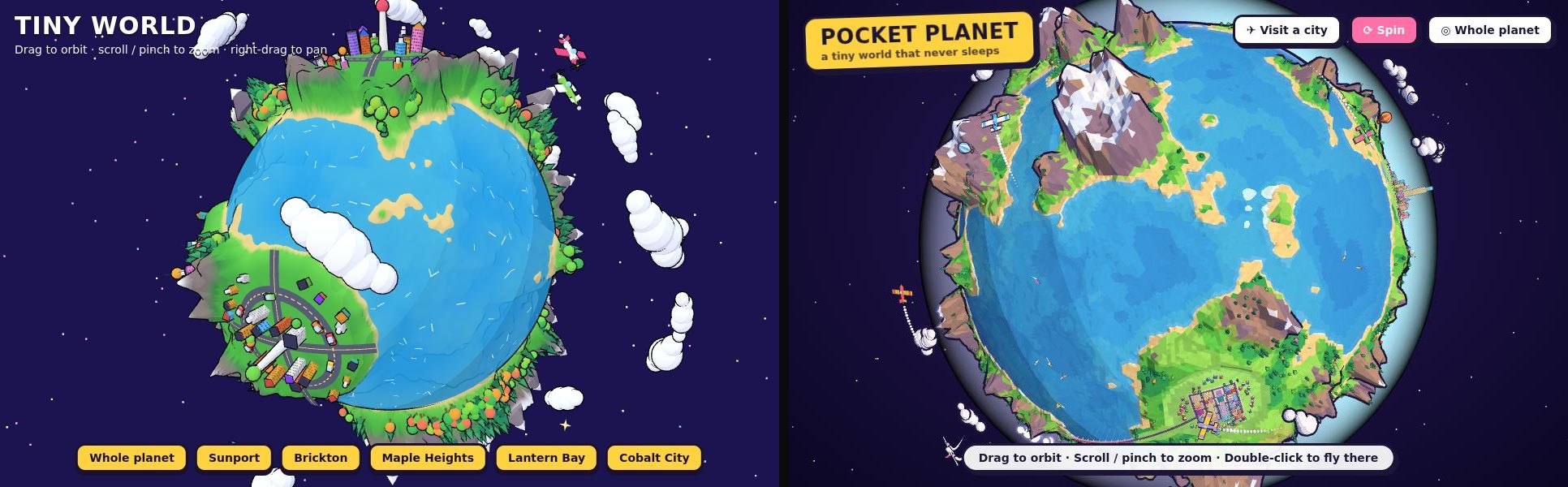
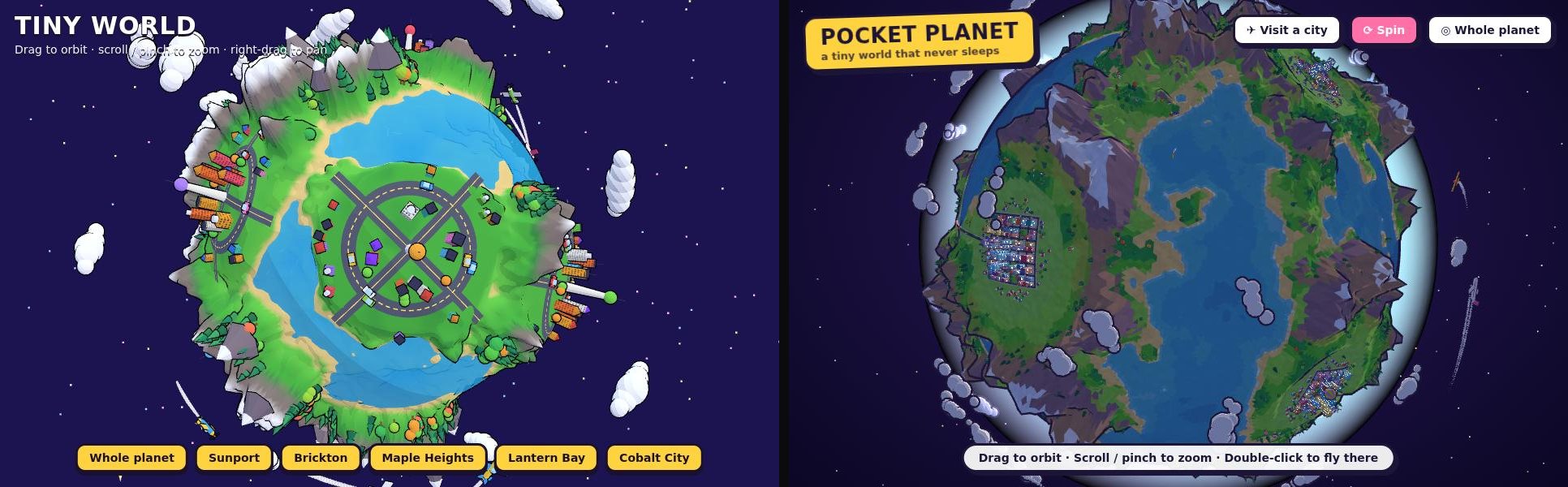
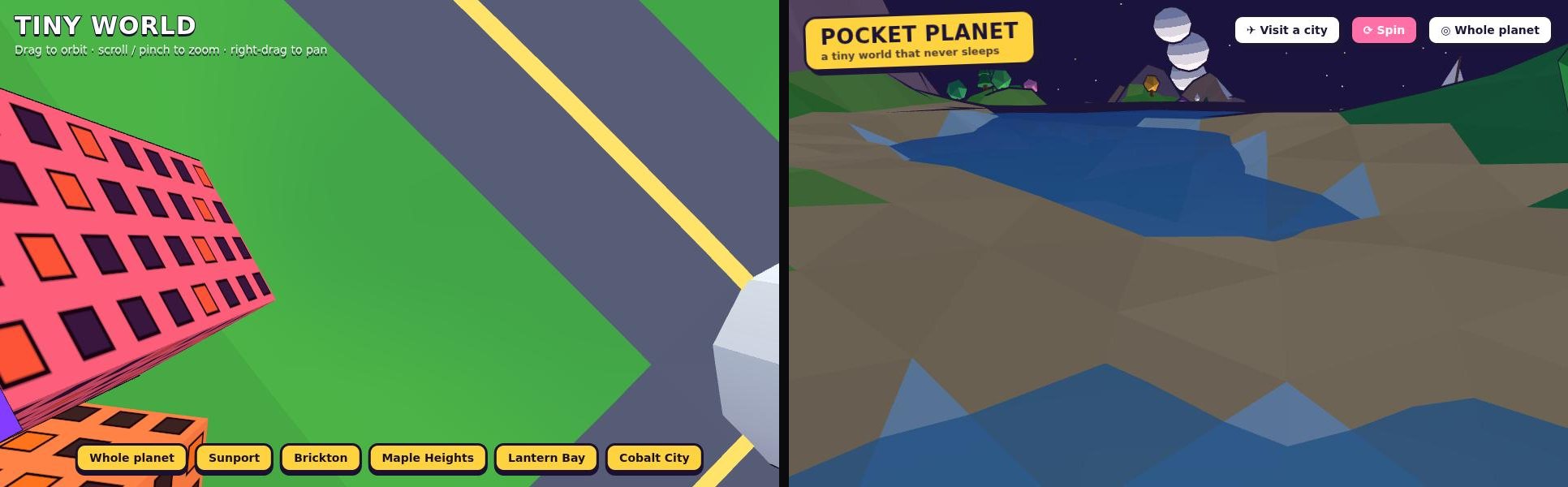
Same camera, side by side
Left: Sonnet 5.5. Right: Opus 5.5. Captured by the same automatic check after each model said it was done.
Our take
- Sonnet 5.5 shipped a complete, working, playable world in half the time for a fifth of the price. It is cheerful and easy to read.
- Opus 5.5 is closer to the "comics-like" ask and more carefully finished at the planet's edge.
- Sonnet's rough spots: some clouds float far off the planet, a few rocks poke out of the rim, and the closest zoom goes inside a building.
What this does not show
- One run each. Run it again and both planets would come out different.
- Not blind. Both models read the same notes about what we liked in earlier planets before building.
- No real-GPU frame rate measured, and not tested on a phone.
- Needs internet: three.js loads from jsDelivr.
Made by OhMyUnicorn Forge: describe an app in plain words, get a live URL.